Showing posts with label tourism. Show all posts

Monday, September 21, 2015

Czech Your Wallet - and other Misadventures

Cesky Krumlov
One morning in Prague, we boarded a bus for a three hours ride to a village in southern Czeck Republic, on the border with Austria. For 15 euros, we bought tickets on a comfortable, airconditioned bus. We mostly wanted to see what the Czech countryside looked like. 

Through rolling, green farm fields we reached the UNESCO World Heritage Village of Cesky Krumlov: http://whc.unesco.org/en/list/617
The castle on the hill dates to the 13th century and the lovely village is like that from an old world picturebook, with crooked cobblestone streets and little shops leaning into each other, all conspiring to lure tourists inside and dazzle them with souvenirs. 

We resisted most of the temptations but did have coffee and apple strudel on the edge of the Moldau. The very second we started our stroll through this medieval village, an elderly lady approached us, asking if we spoke German or French or Dutch. I told her we did. She gestured wildly, explaining that she couldn’t find her friends back and that their bus was almost leaving. After some questioning we found out that she had left a friend on a patio while she was going to look around the village. But which patio? She remembered seeing the castle on her left and coming across a bridge. The village is full of patios and bridges but we decided to see if we could help her to find her friends. 
We walked down one alley, traipsing through puddles, the Moldau on our left and the castle up on the hill. Finally we spotted a patio that she thought looked familiar. But no friends. A waitress explain in Czech and broken English that her friend had left for the bus. 
Rosalie, as she was called, told us many memories and stories as we walked along, but no recollection of where she had to catch the bus. Kees decided to sprint ahead and let the bus driver know that she was coming. She did remember the tour company but there are at least three bus parking areas around the town. Kees took off - I yelled a Plan B as he left. Just in case we’d never find each other again.

So Rosalie and I trudged, arm in arm, across bridges and through alleys. I dragged her up steep staircases toward the castle. Through the courtyard. “I was here this morning,” she’d say. 
“Good,” I thought, “at least she came this way.”
She was panting and puffing and I thought she’d collapse right there and then. No sign of a bus or a parking lot.
Across another bridge, up more staircases. “I’m 84, you know,” she puffed. But she kept on trudging.
I asked in a shop “Where are the bus parking lots?”
They pointed and gestured - a long way away.
We went through the castle grounds and found more long roads around. No Kees in sight. No bus in sight. I finally spotted a car with a lady in it and ran over. “I don’t know this lady,” I explained, “but she can’t walk much further and she’s going to miss her bus!” 
“I’ll drive you,” the lady said.
We got in and this kind lady drove us way around, across the main road and to a bus parking lot! A frantic, white haired lady with a cane spotted us and came running! 
“Don’t tell her what happened!” hissed Rosalie, kissing me on both cheeks.
The bus driver had been at the intersection on the look out for our missing lady. He,too, kissed me on both cheeks for returning what he had lost so carelessly. They should not let little old ladies loose in this medieval town without a map or a phone number for a taxi! 


We saw the entire village in record time while racing around with Rosalie. But we did relax over a nice dinner in a "medieval castle" that night. What do you eat for dinner in a castle in Czech Republic? Why, wild boar of course!

Wild boar for dinner
At least this chapter had a happy ending. Unlike the adventure we had in Prague itself. 
When we moved into the Old City, we took the metro. Pulling our little suitcases, we came up from bowels of the city onto a large square hemmed by ornate buildings. As soon as we stopped to look around and get our bearings, a guy approached us and asked if we wanted to exchange money. Of course we looked like total tourists.
“No thanks,” we waved and briskly walked away. Ten minutes later we had found our hotel and Kees discovered that his wallet was gone. “That guy!” we both said.
Kees hurried back but of course, no one was there. We spent the next several hours canceling credit cards. It was no problem and everyone was very helpful. Within ten minutes of having the card stolen, a cash withdrawal was already made. We found out at which ATM and spent the rest of the afternoon at a small police station. We hope they will actually follow up by finding the guy on the ATM’s video. The police were very thorough and helpful. The worst thing now is a missing driver’s license but that, too, can be replaced.
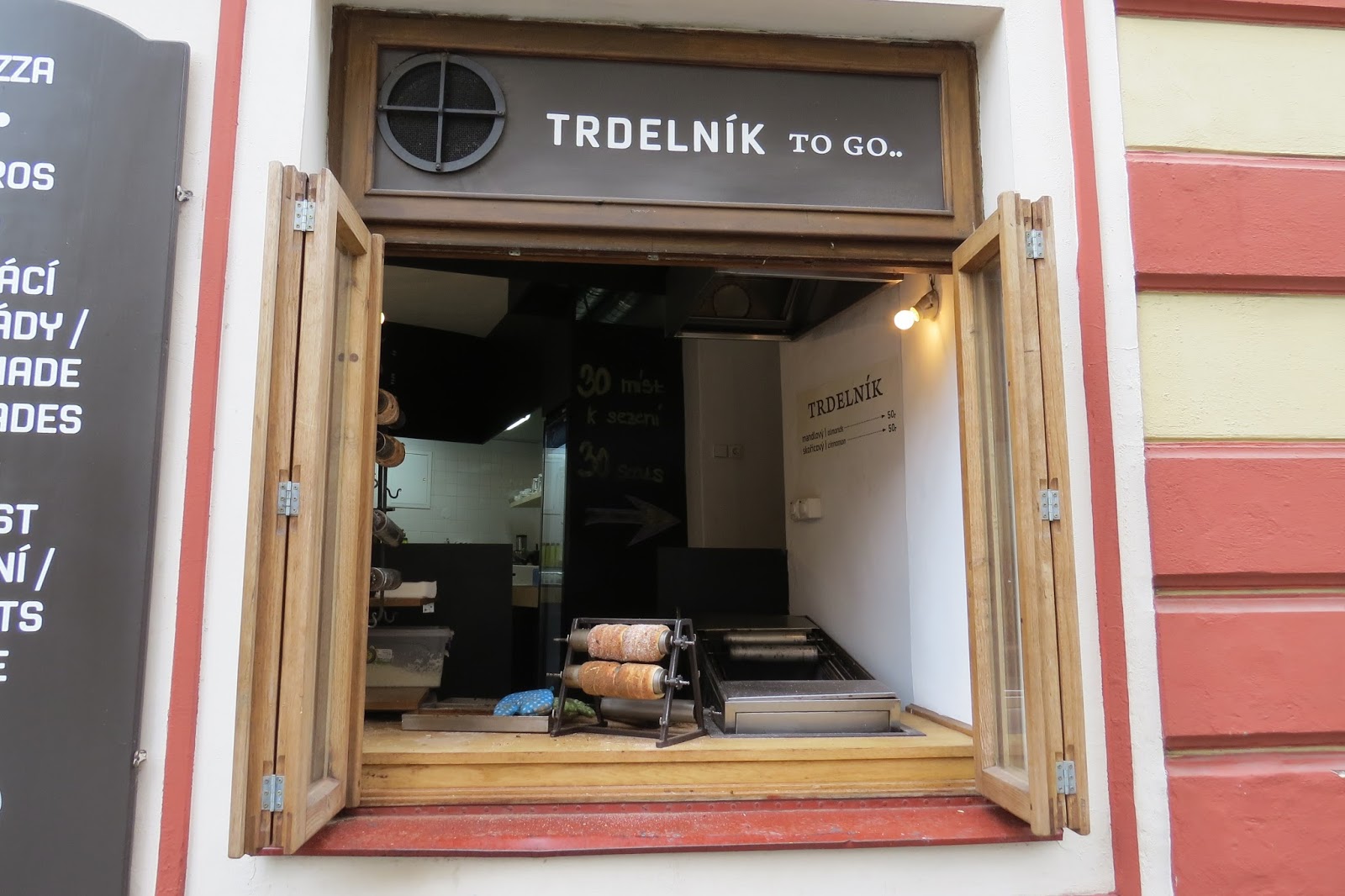
Local tradititional pastries

What we learned from this mishap was that we had done the right thing by only carrying one or two credit cards in the wallet and keeping another card in a different place. Keep your passport separate from a wallet and behind zippers! Velcro isn’t good enough for professional pick-pockets! Keep a piece of paper with your account numbers but also with your social security number handy. And 1-800 numbers to call if needed. We were grateful to have money on our Skype account so that we could use our own laptop to phone.

Live and learn… 

Saturday, June 6, 2015

Lavender, books, bed and a hot tub!

Well, after meandering for 2,000 KM through Washington and Oregon, we just found the best B & B anywhere!
We tried other islands...
We tried the coast, the valleys, the foothills...

We stayed in lovely places with gorgeous views or in fun locations.
But, until now, we had not found a place on 5 acres, surrounded by glorious flowers and rows of lavender. A place that has kingsize beds, memory foam no less! A hot tub on the deck... AND it is under $100 per night, including breakfast.


Maybe you guessed it?
We are home again! :-)
At Between The Covers Booklovers' B & B we really do live in paradise. I picked strawberries and even a few early raspberries from the garden today. Hummingbirds came to drink when I watered the veggies.
The ducks and chickens happily waddled around the garden tonight.
We just brought a basket of muffins, homemade granola, yogurt with organic strawberries and cantaloupe to our guest. I'd love to stay here, too! :-)

O wait, I can. But I DO have to do all the weeding.

If YOU would like to stay here, check out: www.betweenthecoversbandb.com
or join us on Facebook: Between the Covers, Booklovers' B & B

Wednesday, June 3, 2015

Driving from Newport to Eugene, Oregon

Secret Garden B&B in Eugene
There are different ways to get from Newport on the coast, to Eugene in the Willamette Valley. 

Our favorite way is to drive south along the 101, along the cute little town of Yachats, by the Sealion Caves, past Cape Perpetua, with its gorgeous tidal pools and visitor’s centre. 
But this time it was raining, a miserable cold drizzle and fog. So we opted for Hwy 34 along the Alsea River. 

This is a drive through a rhapsody of green: tall woods, moss covered branches, towering ferns. You end up in Corvallis, a small town with a university and funky stores and pubs. We had lunch at New Morning Bakery, did some chores, some shopping and then drove along backroads, through impeccable Mennonite farm country to Eugene.
Breakfast at The Secret Garden

In all the 40+ years we’ve been coming here, we have almost always either lived here or stayed with friends. 

This time we booked a B & B right next to the campus. It exceeded all of our expectations: The Secret Garden is a huge heritage house surrounded by greenery. We are kiddy corner to the campus and love roaming the paths that we walked here when Kees was a student. 

Many of the restaurants and shops remain unchanged. 
We have been having Italian dinners at Mazzi’s for over 40 years. Smith Family Bookstore, Prince Puckler’s icecream, and many other places have been here forever it seems.

Our room in the B & B is lovely, with a large private bathroom. Breakfast is served in a beautiful parlor with flowered porcelain dishes. We highly recommend this place if you ever want to stay in Eugene - same cost as an impersonal hotel room but with lots of character and charm.

We spent time at both locations of Smith Family Bookstore today, browsing the endless piles of books scattered everywhere. This is book heaven. And they have most titles that you might be looking for. It’s amazing they can even find them among the teetering stacks of books. I was delighted to finds two of Patrick Taylor’s Irish Country Doctor titles. And Kees found some nice travel titles.
We had dinner at one of our old favorites: the Oregon Electric Station. The pub has comfy chairs and nice food.
Tomorrow we’ll be homeward bound.

Websites:
http://www.oesrestaurant.com

http://secretgardenbbinn.com

Tuesday, February 17, 2015

Coffee Time!

Altar to coffee
 I often wonder who the first person was to discover that something is edible… Like, who was the first soul brave enough to taste blueberries and then wait to see if she would keel over dead? And rice… who figured out to collect those tiny seeds and cook them? 
I can see that tropical fruits were easier to figure out. A banana, a coconut I can see how you might figure out to open them and sample the inside. But who was the person to pull the first carrot out of the ground and say ‘Oh, a carrot!’? [BTW did you know that carrots were not orange until some Dutch royal loyal tinkered with it?]

Who first stepped on a walnut and then put the mushy insides in his mouth? And corn - would you figure out how to shuck and cook an ear of corn if you had never, ever seen one?

Tea, also, is understandable. I can image a Chinese family, sitting around a fire with a pot of water ready to boil. Some dry tea leaves flutter down from the bushes on a breeze. Some land in the pot and, look, they color the water and… hhmm… it doesn’t taste bad. Maybe even better than plain water. Let’s try that again.

But coffee? It took a whole series of coincidental accidents to figure that one out! Legend has it that a 9th-century Ethiopian goat-herder by the name of Kaldi, noticed the increased energy of his flock. They didn’t want to sleep and happily jumped around the field. He checked the area and found that they had nibbled on the bright red berries of a certain bush. He chewed on the fruit himself and felt a surge of energy and excitement. This prompted him to bring the berries to a monk in a nearby monastery. But the monk disapproved of the berries and threw them into the fire. A most tantalizing aroma rose from the ashes, causing other monks to rush over and investigate. The roasted beans were quickly raked from the embers, ground up, and dissolved in hot water, yielding the world's first cup of coffee! The rest, as they say, is history. I haven’t seen any Starbucks here yet, but a popular coffee chain is called Kaldi, after that original shepherd.  

Ethiopia's coffee ceremony is an important part of their social and cultural life. When I first spotted the ceremonial area where coffee is brewed, I took it to be a religious altar. And I guess, in a way, drinking coffee in Ethiopia is a bit of a religious experience.
The ceremony is usually conducted by a young woman, dressed in the traditional Ethiopian costume of a white dress with coloured woven borders. The long, involved process starts with the ceremonial apparatus being arranged upon a bed of long scented grasses (or plastic artificial grass indoors). The roasting of the coffee beans is done in a flat pan over a tiny charcoal stove. This is how it is done even in the lobby of the small hotel where’s staying… The strong smell mixes with that of incense which is also burned during the ceremony. The lady washes the coffee beans on the heated pan and stirs it, shaking away the husks. When the coffee beans have turned black, they are ground with a pestle and mortar. The ground coffee is stirred into a black clay coffee pot locally known as ‘jebena'.
Can you just smell it?!
The lady finally serves the coffee in tiny china cups to those who have waited and watched the procedure for the past half-hour. Pouring a thin stream of coffee into each little cup from a height of one foot without an interruption apparently requires years of practice. You then drink the coffee with plenty of sugar but no milk. It is also tradition to eat fresh popcorn with your coffee. 

In parts of Ethiopia, the coffee ceremony takes place three times a day - in the morning, at noon and in the evening. It is the main social event in the village and a time to discuss the community, politics and life in general. You must have at least three cups, as the third round is considered to bestow a blessing. And, I must say, its flavor is heavenly and smooth without the acid taste so often found in coffee elsewhere.
I’m told the full ceremony can take three hours, so never complain again if your workers want a 15 minute coffee break!


I highly recommend watching this sort video of the ceremony:


Thursday, March 27, 2014

'Alles Goed' in Israel

Random Observations

Everywhere throughout Israel are roadside stands, and little restaurants, with a huge fruit press. Huge piles of fresh oranges, pomegranates, and many other kinds are simply sliced in half and hand squeezed in the press. Delicious! I want one of these presses but they don’t fit in my backpack...

People in Israel, by and large, are very welcoming and kind. Arriving at the Central Bus Station in Tel Aviv, we were told to go outside, cross a road and find a local bus stop for the bus ride to the hotel. We couldn’t find it for the life of us. Kees asked a taxi driver but he just tried to talk us into taking the taxi. A passing man stopped and asked “How can I help you?” He then proceeded to ask around, take us across the road and walked us to the bus stop. He shook our hands and was off.
As soon as we got on the bus, I asked the driver where we had to get off. He didn’t know. Instantly four or five people on the bus called out “Don’t worry! We will help you!” They whipped out cell phones, punched in the address we needed and each kept an eye on us to tell us where to get off the bus. I just hoped they agreed on where we had to get off... Many of them asked “Where are you from? Ah! Canada. So far away! So beautiful! I have a cousin in Montreal!”
We have to grin when we listen to people talking together. Using hands and arms, they can have very intense discussions and it sounds to us, as if they are always in a heated argument.

Spices in Old Jerusalem
Some signs are in 3 languages.
If you plan to travel to Israel it might be useful to know that you can get an entry visa upon arrival at the airport, at no cost. However, if you leave the country via a land border, i.e. driving into Jordan, it will cost you 110 NIS (New Israeli Shekels) per person (about US$ 35.-). When you leave Israel by air, there is no exit fee. Entering Jordan at Aqaba did not cost us anything but the exit fee was about 5 JD (Jordanian dinar or US $7.50).

Israel is very expensive. Eating out, even groceries are much more expensive than in most other places. Perhaps the cost resembles that of Australia, where we also found daily living to be very expensive. Public transportation is the exception in Israel: we found it very reasonable.

Internet is readily available everywhere. And, unlike Australia, is free in hotels, restaurants, even on the long distance bus!

Israel in the north is much more lush and green than the arid, rocky south. The south is warmer but, to us, much less attractive.

We were surprised to learn that orthodox Jews do not serve in the Israeli Army, even though this is their own country. Arabs do not serve, which might be understandable in terms of politics and religion. This leaves a relatively small section of the population that has mandatory military duty.

In Jordan we were told that many people have canceled plans to travel there, since the troubles in Syria and Egypt. In daily life, we notice little or nothing of the conflicts in and around Israel. However, while we were here a partial mobilization had been called and there was military personnel on almost all buses going to and from their stations. We see the odd military helicopter patrolling the shore, but not much else is noticeable. I  sure hope peace prevails for all countries in this region.

Along major highways, signs are bilingual or trilingual - in Hebrew, Arabic and English. But in most other places, they are only in Hebrew. My first reaction when we arrived, was that we could have rented a car to drive around. Traffic is fairly civilized, although some drivers are crazy and lines on the roads seem to be mere suggestions. But the further we traveled around the country, the more we realized that streets often don’t have names, and that many signs are not decipherable at all. It would have been very difficult to find our way around, unless you have a very good GPS.

Our Arab taxi driver in Jerusalem heard that we were born in Holland. “Alles goed!” he yelled while gripping the wheel and swerving through traffic. (‘all is well’) Each question or concern we had, he waved away with a hearty “Alles goed!” So now that’s what we say when we’re not sure how something is going to work... alles goed!

Language: we’ve picked up very little here in the way of language. Some in Hebrew, some in Arabic.
‘Shalom’ and ‘Salaam’; ‘To da and Shukrah” for thank you.

We are staying south of Tel Aviv, in Bat Yam, right now, and not many speak English. Even the restaurant menu’s are in Hebrew only. We have no idea what we order but ‘beer’ seems to work in all languages. Tonight I asked for white wine. It came in a large glass, more than luke warm, it was very warm. I asked for ice. No ice. Did I want cold wine? Well, then they had red wine for me. It was ice cold. Tradition!

My favorite airport moment: an Orthodox Jewish family walked by us. All dressed in black and white. The father had long corkscrew curls and wore a black hat, the mother long black skirt and white shawl. The little boy spotted the punk ahead of me in the check-in line. He stopped and his mouth dropped open. He stared at the blue mohawk and earrings, the black lace gloves and studded jacket. A wonderful cross-cultural moment.

We have had a fantastic adventure traveling around Israel and into a small corner of Jordan. We have met such nice people and seen many amazing places. Tomorrow we leave for Turkey.

Shalom, Israel.

Tuesday, March 25, 2014

Sleeping in a Bedouin Tent in Jordan

Bedouin woman
The bus from Tiberias drove south, as far south as you can go in Israel.
We slowly descended to the Dead Sea which, at 417 meters below sea level, is the lowest spot on earth. Crusted salt deposited clung to the shore line. The air was hazy with sand blowing in from Egypt. All day we drove along a solid wall of light brown mountains to the east - behind which we knew was Jordan.
Via Jericho and Masada, we drove south through the Negev desert. Considering that the bus cost us only about $25.-, the bus seems to be one of the most economic ways to travel throughout Israel.
Eilat, the southern most town in Israel, was a disappointment. It seemed a dusty, run-down version of Las Vegas with glitzy hotels, a small strip of beach and lots of amusement places. The worst thing was the airport. It is right smack in the middle of town. Huge airplanes come thundering over, missing the mall by a few feet. You can sit sipping beer on the beach and watch the belly of an airplane come right overhead.
We were glad we hadn’t planned on spending more than one night here.
Seven Wonders Bedouin Camp

The next morning we took a taxi to the Jordanian border. The paperwork on the Israeli side took perhaps a half hour because of line ups. The Jordan side was faster. Then we sat sipping Turkish coffee until our taxi showed up. We had booked this via our accommodations in Petra. A beautiful new car with a lovely guy who spoke English picked us up and drove us the 2 hours to Petra, at a very reasonable rate.
Driving along we noticed large white tents with U.N. logos. “Tents given for free to Syrian refugees,” our driver explained. Then he grinned. “Once the refugees move to the city, they sell these free tents for a profit to the Bedouin!” Probably not what the U.N. had in mind...

The camp at night
The accommodations I had picked from the internet. Petra is surrounded by regular hotels: the Ramada Inn, the Marriott. But, I thought, why would you want to stay in a normal hotel when you visit a place as unusual as Petra? Especially when you can stay in a bedouin camp?! On the website, Seven Wonders Bedouin Camp looked like fun. (http://www.sevenwondersbedouincamp.com/homepage.html)
We decided to be brave and booked a 3 night stay in a tent. And we were glad we did. To us, three nights was the perfect length of time.

The camp turned out to be a collection of square white tents, with inner and outer shells, a sold frame with a door. Inside were two metal bed frames with a big soft mattress, topped by 3 heavy blankets. When we crawled in at night, we felt like we were in a big warm nest surrounded by cool desert air and no sounds at all. Until 6 AM when bleating sheep strolled by. And until our last night when we laid awake listening to the distant thunder of shooting in the Gaza strip.

Me in the bedouin tent where we spent the evenings sipping tea.
We only had electricity between 7 PM and 11 PM but didn't miss anything. Internet was turned on for about an hour at night and one could see why it was so limited. As soon as they had internet, guests were staring at their devices instead of talking to each other! We met people from all over the world in this camp, and there were only about 14 people there at the same time, which was lovely and quiet.

Besides the 20 some guest tents, there were several very large, black traditional Bedouin tents. These had carpets on the floor, and many large woven pillows for reclining. At one end was a primitive wood stove belching smoke into the tent. And heat. We were toasty warm and ended up eating most meals here. We also drank endless small glasses of tea. We liked that this camp, as many Muslims sites, was alcohol free. But tea, in contrast, flowed freely. A sweet black tea with sage. Very addictive...
On the first night we were told that they made a point of serving something different for dinner every night. Every night we had rice, chicken, salad and potatoes. It was good - but no variety :-)
The camp was run by several very nice, friendly young guys. They were very thoughtful and kind, bringing us tea, offering rides, etc. At night they played a traditional string instrument and a drum, singing long, soulful ballads in Arabic.

A sleeping tent.
At US 45.- p.p. for one night, including breakfast AND dinner, this was likely a fraction of the cost of one of the fancy hotels and we thoroughly enjoyed the experience.

On our first afternoon, we strolled down to “Little Petra” - a small version of cave dwellings and carved facades, which is still ‘in the wild’ without entrance fee or any protection. It was a Friday afternoon - weekend for the Muslims who were out in full force: family after family squatting in the shade of rocks, making campfires, cooking tea and grilling meat. Children were running everywhere, women sat in the shade visiting. Smoke twirled up behind every rock from their little fires while they laughed and sang and enjoyed a sunny afternoon.
The evening entertainment.

When I watch a real shepherd, complete with crook, walking through a field of boulders with his flock, wearing a long black dress and flowing head scarves, I marvel at how little seems to have changed in this area over the ages.
Until he whips out his cell phone...


One night they cooked dinner in a deep pit in the ground.

This metal basket held layers of chicken, veggies and potatoes and cooked in the ground for 2 hours.


Wednesday, March 19, 2014

We Made It!

Ancient synagogue excavations.
Gorgeous blue sky greeted us on the last day of our hike. Arbel Guesthouse outdid itself with breakfast: fresh grapefruits and avocados from their own garden, olives, cucumber, tomatoes. Fresh yogurt. Homemade tea. Bread, granola and baked eggs. This was by far the best gourmet place we stayed at in Israel.
We hoisted our day packs onto our backs and set off - immediately down a green valley of wildflowers and past ancient ruins of a synagogue. We descended along narrow cow trails into a steep valley, rock cliffs rising on both sides. We met several herds of cows with new calves.
The valley below Moshav Arbel


At the bottom of the valley we skirted the Bedouin village of Wadi Haman, walking through orchard after orchard of grapefruits, olives, oranges and bananas.
Bedouin village of Wadi Haman.
And then we saw it up close: the Sea of Galilee! I touched the water and marveled at the idea that we were now at 200 meters below sea level! The Sea of Galilee is Israel's largest lake. Directly across from the sleepy villages is the Golan Heights, and then Syria. We don't hear or see much of any violence. The only military presence we have seen, so far, is the odd soldier, a helicopter now and then, and two huge tanks in the middle of a forest. When we got closer we realized that we completely inflatable! Decoy tanks?


It is interesting to note that all Israeli Jewish men and women (except the ultra orthodox) serve in the army swell as the Druze. The Arab Israelis are exempt from military service.


The only place to have lunch in the shade was in a viaduct!
As we walked along the sea of Galilee to our final destination, we saw the Church where fishes and bread were multiplied, according to the gospel. We saw the place where Mary came from, Mount Beatitudes where the sermon on the mount was delivered, and finally ended by in Capernaum (interestingly pronounced Kafh Na Ghoom), the village where Jesus reportedly lived, picked the disciples and more. Ancient ruins are being preserved and busloads of Christians from around the world visit the site.

Sea of Galilee!
65 KM!
My toes are sore but we did it.
If you are interested in hiking AND in visiting Israel, we highly recommend this experience.
You can hike the entire trail on your own by following the orange symbols. It is a good idea to buy the book and map of the Jesus Trail. We booked through the organization that has developed the trail: http://jesustrail.com
When you book with them, they advertise this as a 6 day hike. In reality it is only 4 days in which you walk 65 KM. Day 1 is the day you arrive, on your own, in Nazareth and stay at the Fauzi Azar Inn. Day 2 is meant for exploring Nazareth. The Inn offers a free tour. That was the only part we did not like. True, we are not good tour people, but 45 minutes into the 'tour' we were still standing in the same spot and had only heard about the guide herself and about the Inn's owner. It felt a bit like one of those time share promo talks. We actually left the group and explored on our own, having a wonderful time.
The organized hike is not cheap but when I prized out different hotels along the route to look at making all of our own bookings, it seemed to be about the same price. The organized hike includes all breakfasts and all dinners while on the trail. And, best of all, it includes having your luggage moved for you. This worked like a charm. Our luggage was always waiting for us. On the last day, the taxi driver who had our luggage, picked us up at the end and brought us to a hotel we had booked in the city of Tiberias.
On our very first day, a volunteer (in our case a lovely American girl) accompanied us. This made us feel comfortable and helped them make sure that we could find the trail on our own.

So, now we are resting our feet (Kees is having a cold beer!) and tomorrow we take public busses through the entire length of Israel, via Jericho, the Dead Sea and the Negev Desert, to Eilat - the southern most town in Israel.

From there we will cross the border into Jordan. Next time: Petra!
The end of the trail!

Tuesday, March 18, 2014

A Day of Firsts!

The Horns of Hattin

For the first time we spot the Sea of Galilee!

Hiking through cow patties.
 This is Day 3 on the Jesus Trail and we hike from Kibbutz Lavi to Moshav Arbel.
The sun breaks through the clouds and the sky gets blue. The weather, this week, is perfect for hiking.
But it is the first time we hike among cows and even the odd steer. They are huge, but just curious and we don't get charged.
We do follow their little, narrow trails through fields, among boulders and up and down hills.

It was the first day we had to climb up and up and up, rounding some high, rocky outcrops called The Horns of Hattim. Hard to imagine, as we walk the green fields with wildflowers, that the is the very spot where, in 1187, the army of Saladin defeated the Crusaders!


It was the first time ever I have visited a Druze site.
The Druze are an Arabic group of people, living in Israel, who are recognized as a separate religious culture. Check out this link if you want to learn more about them: https://www.jewishvirtuallibrary.org/jsource/Society_&_Culture/druze.html

The Druze have ties to the Prophet Jethro and to Moses.
We visited their temple Nebi Shu'eib.
The men wear white turbans or a fez, while the women wear white headscarves. The temple dates back to the year 300, parts were constructed in 1187. Pretty darn old.
My one blister is getting bigger so I limped into the area and was happy to sit down for a little picnic lunch of fruit, pita and eggs.
First time we've visited a Druze temple.

We decide to take a short cut to the village Moshave Arbel, rather than hike the extra 10 KM through the hills. All day we had a view of our ultimate goal: the Sea of Galilee. As we enter the village in which we are staying tonight, I notice it is clean, with wide streets, sidewalks and lots of greenery. Turns out this is a Jewish village, as opposed to the many Arab towns in which we have stayed. I didn't know this but Arab Israelis don't pay local taxes and thus their villages don't have the services of villages like this one.

The word I have perhaps heard most of, here in Israel, is "welcome"! Everyone is incredibly welcoming. The hosts at Arbel Guesthouse welcomed us with a jug of lemonade. We have the top floor of the house, with a jacuzzi, bed and small kitchen. First time ever I have seen a simple hole in the wall serve as bathroom vent.
And, first time ever, we were given the key to the house but also the key to the gate that blocks access to the entire village! When we walked past, I wondered why there was a huge gate that could close off entrance to the town. Things like war or invasion of tanks crossed my mind. Never did the real reason occur to me. Our host explained that nearby farmers will come and steal sheep. That's why we now have a key to the village! We and the sheep will be safe tonight!
First time we've had a short piece of pipe as bathroom vent. It works.

Addendum: tonight we enjoyed the best possible dinner. In such a small village nears the shores of Galilee we 'discovered' that the owner of our guesthouse, Arbel Guesthouse, is an amazing chef. Yishmael served us fresh mousse of mango, followed by delicious soup. Then the best roast chicken we've ever had (hope Karla doesn't read this!!), with salad with cranberries and nut and FIVE different vegetables, mashed potatoes topped with sweet potatoes - all beautifully served. Then we had homemade strawberry and lemon sherbet, followed by homemade limoncello. OMG - fabulous meal worthy of any 5 star restaurant. Moshev Arbel should be on the map just for this!

Sunday, March 16, 2014

Jesus Didn't Take The Bus!

What would Jesus do if he lived here?
Well, as the brochure of the Jesus Trail states “Jesus didn’t take the bus.” So we do the same - we walk the Galilee while we are here.

We booked this hike through the JesusTrail Tours, which means we still hike just with the two of us, but they arranged our overnight accommodations along the trail, the meals AND they transport our luggage. A perfect arrangement. 
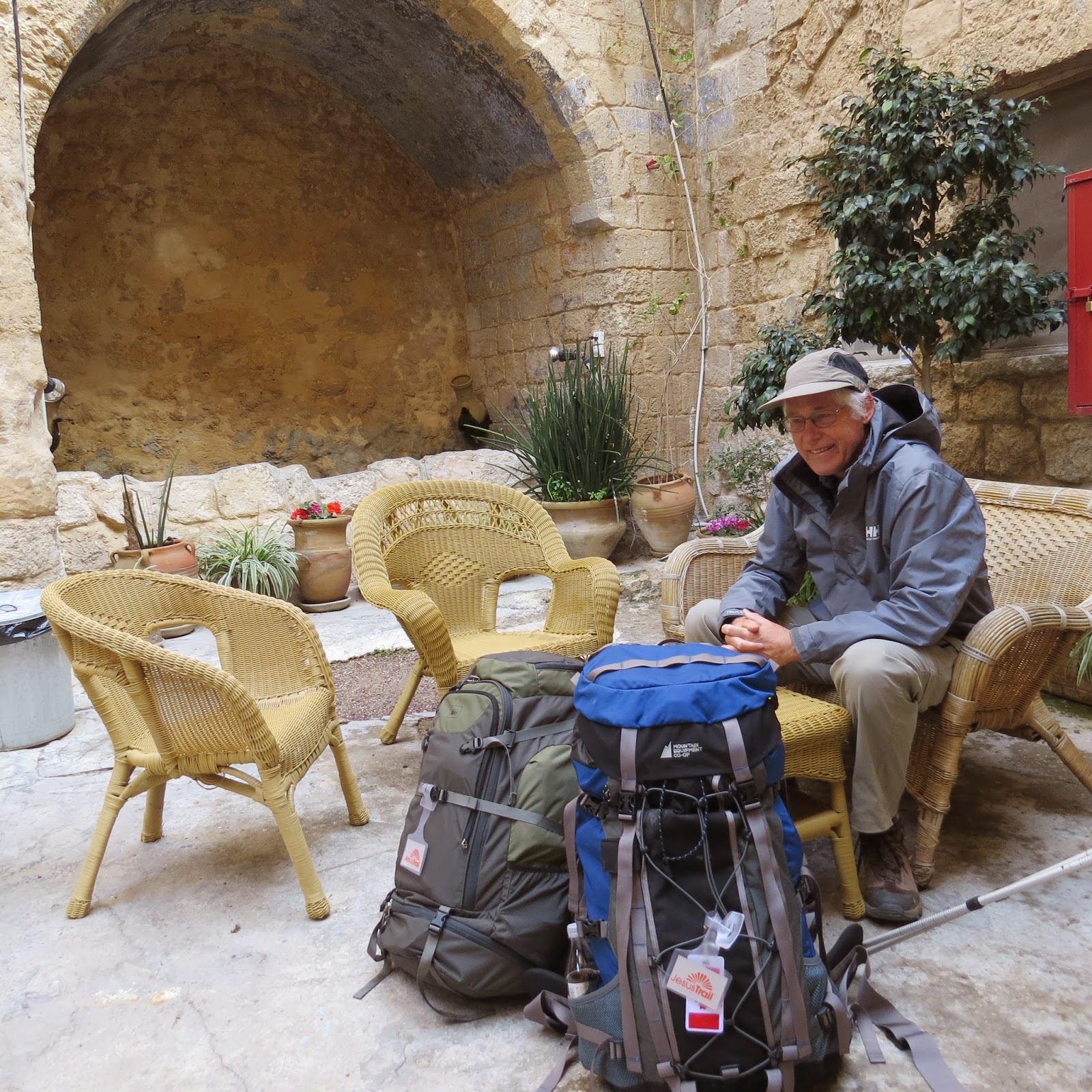
Fauzi Azar Inn: Kees zit bij de pakken neer.

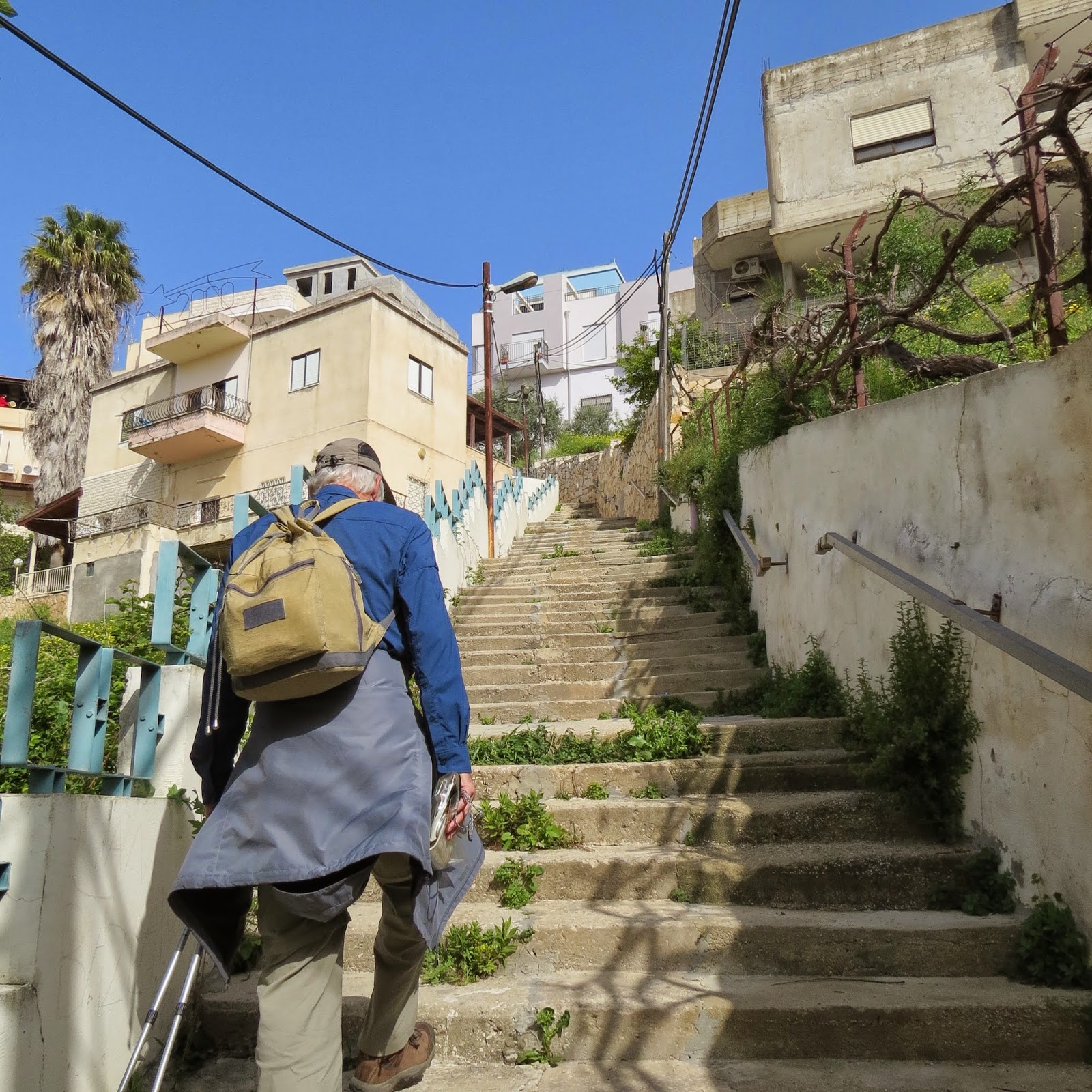
Leaving Nazareth this morning, we followed the orange trail markers, through the alleys of the old city, up 350 steps and out of the city. The trail took us through old olive groves and yellow fields of mustard seed.

Whenever we pass through a town, children and adults alike called out ‘hello’ and ‘Shalom’! These are Arab children and ‘shalom’ is a foreign word so they yell it at foreign visitors. Everyone is very welcoming and kind.
We had a snack of nuts and fruit outside the gates of Zippori, a historic national park including Roman ruins dating back to 700 BC.

Then we headed down into the city of Cana where Jesus reportedly performed his very first miracle: turning water into wine at a Cana wedding feast. Now, Cana proudly displays jars of clay (as in the famous music group Jars of Clay) and sells mineral water as Cana wine... or perhaps they bottle real wine.

There are two churches, a Catholic one and an Oxthodox church right next to each other, each claiming to be the original site. Our guest house in Cana is immediately next to the churches. The very welcoming Arab Israeli hosts served us fresh lemonade, made from the lemons in the backyard, before showing us a room.

It is interesting to note that Arabs and Jews still live in very separate areas of town, if they even share a town. Cana has a Christian side and a Muslim side. Some towns only have one or the other but not both. Apparently they get on well enough on the surface, but many nuances play a role in the deeper understanding of how both cultures mix or don’t mix.
Our host just came and served us Turkish coffee. Tonight they will serve us a traditional dinner. 
Stay tuned for tomorrow's adventure as we spend the night at an orthodox kibbutz. Not sure if there will be wifi.
350 steps up and out of Nazareth

Yellow fields of mustard seed outside the city.

Wild cyclamen

Enormous cacti everywhere.

Cana, the city of the first miracle.